
Teen DBT skills group
- Mondays, 5:00–6:00 pm ET
Comprehensive DBT
When emotions escalate quickly, relationships become intense, or the same painful patterns keep repeating, DBT offers a structured way to build more stability, respond differently in difficult moments, and create meaningful change that carries into everyday life.
Current groups
Groups run weekly and virtually. A consultation confirms the current opening, whether a group is joined on its own or as part of comprehensive DBT, and which track fits.
Schedule reviewed August 26, 2026. Times can change as groups fill—confirm current openings during your free consultation.
At a glance
Dialectical Behavior Therapy helps people understand intense emotional experiences, reduce behaviors that create additional suffering, and build practical skills for real-life situations. “Dialectical” reflects the central balance of the treatment: accepting your experience as it is while also working toward change.
Comprehensive DBT is more than a therapist occasionally teaching a DBT skill. Its coordinated structure includes individual therapy, skills training, phone coaching, and a clinician consultation team. Each component supports a different part of the change process.
DBT may be considered when intense emotions, impulsive behaviors, self-harm, suicidal behavior, unstable relationships, or repeated crises are significantly interfering with life. A consultation helps determine whether comprehensive DBT, DBT-informed individual therapy, or another treatment approach is the best next step.
Referred for DBT?
If a psychiatrist, therapist or treatment team has already recommended DBT, the consultation is shorter and more practical: current group openings, which track fits, what your plan covers, and how soon you could start. Bring your referring provider's name and we will coordinate with them directly, with your written permission.
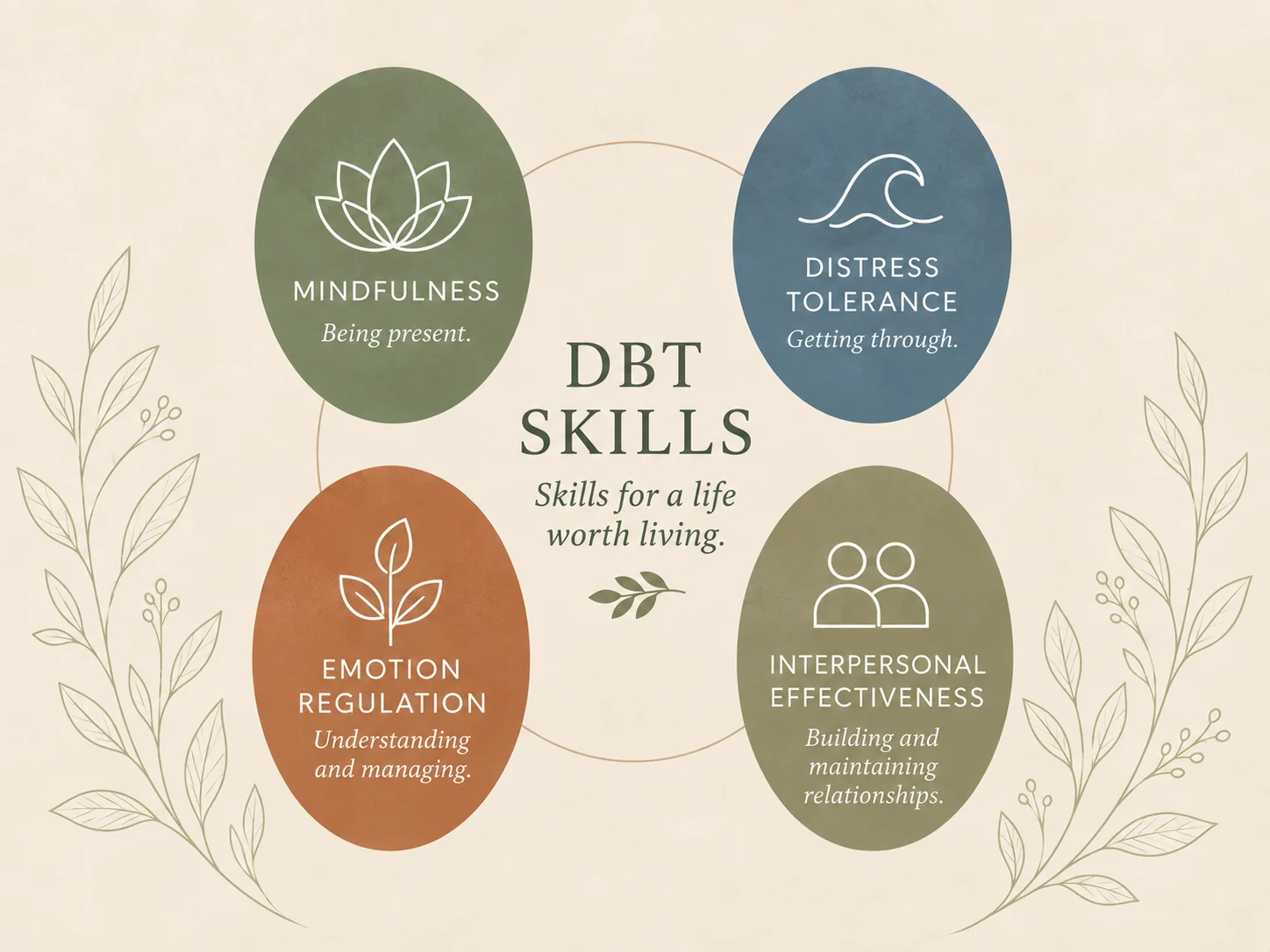
The four skills modules
Every comprehensive DBT client learns the same four skill families—taught in group, practiced between sessions, and applied in individual therapy.




Therapist fit
Availability, insurance participation, and exact service fit should be confirmed during consultation.
 Accepting new clients
Postdoctoral Psychology Resident
DBT-centered care for preteens through older adults and families by telehealth across Florida, at reduced postdoctoral rates.
 Accepting new clients
Licensed Psychologist
Doctoral-level psychology provider
Supportive and change-oriented care for teens, young adults, and families who want practical tools for a more fulfilling life.
 Waitlist — 3–4 months
Owner & Licensed Psychologist
Doctoral-level psychology provider
A warm, reflective partner for clients seeking meaningful change, emotional balance, and a therapy relationship grounded in trust.
Comprehensive DBT
Use a free DBT consultation to review the four program components, current group schedules, and whether comprehensive DBT is the right level of care.